As a veteran manufacturer deeply rooted in the vending machine industry, we’ve witnessed the sector evolve from simple coin-operated dispensers to intelligent retail terminals that integrate AI, IoT, and data analytics. In 2026, the global vending machine market is poised to exceed $930 billion, with a year-on-year growth rate of 10.2% . This growth isn’t just driven by consumer demand for convenience—it’s fueled by manufacturers redefining what vending machines can do. Today, we’re pulling back the curtain on how we’re engineering the next generation of vending solutions to empower operators, delight consumers, and unlock new retail possibilities.
From Hardware to Ecosystem: The Manufacturer’s Role in Smart Retail Transformation
Gone are the days when vending machine manufacturers competed solely on price or durability. Today’s operators need more than a reliable machine—they need a comprehensive system that drives efficiency, boosts revenue, and adapts to dynamic market needs. As a manufacturer, our core mission has shifted from “building machines” to “delivering end-to-end smart retail ecosystems.”
This shift is driven by clear industry data: smart vending machines equipped with AI visual recognition, contactless payment, and remote management capabilities generate 40% higher daily sales than traditional models . For operators, this means moving beyond passive convenience to active engagement. Our latest models, for example, integrate edge computing and AIoT to create “adaptive vending networks”—systems that adjust inventory, pricing, and promotions in real time based on consumer behavior, weather, and even foot traffic .
Core Technologies Reshaping Vending Machine Manufacturing
At the heart of this transformation are three game-changing technologies that we’ve prioritized in our R&D pipeline. These innovations aren’t just add-ons—they’re built into the hardware and software DNA of our machines to solve real pain points for operators.
1. AI-Powered Visual Recognition & Intelligent Inventory Management
Inventory mismanagement—either stockouts of popular items or overstock of slow-movers—has long plagued vending operators. Our solution? AI visual recognition technology that eliminates the need for traditional sensors or weight-based tracking. This system scans and identifies every item in real time, enabling “open-door, grab-and-go” shopping that cuts checkout time to just 5 seconds .
Beyond enhancing the consumer experience, this technology powers predictive inventory management. By analyzing historical sales data, weather patterns, and even local events, our machines generate dynamic补货 suggestions that reduce滞销 rates by up to 20% and boost inventory turnover by 40% . For a convenience store partner operating 50+ machines across a city, this translates to a 35% increase in nighttime revenue and a 22% reduction in operational costs .
2. Modular Design for Multi-Scenario Adaptability
The vending market is no longer one-size-fits-all. A machine for a hospital emergency room (where 39.2% of sales occur at night ) has vastly different needs than one for a high-end office building or a tourist attraction. Our modular design approach addresses this by allowing operators to customize everything from temperature zones (for hot meals, cold drinks, and fresh snacks) to payment systems and exterior aesthetics.
For example, we recently developed a low-temperature vending machine for a dairy brand entering the Asian market, equipped with multi-language interfaces, UV sterilization modules, and energy-efficient cooling systems . For a North American airport client, we integrated touchless payment, dynamic pricing, and branded digital screens to turn machines into revenue-driving advertising touchpoints. This flexibility ensures our machines aren’t just tools—they’re tailored solutions for specific business goals.
3. Cloud-Based Management & Remote
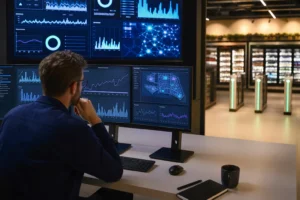
For operators managing distributed networks, on-site maintenance and monitoring are costly and inefficient. Our cloud-based management platform centralizes control of thousands of machines in real time, allowing operators to check sales data, adjust pricing, monitor equipment health, and receive automated fault alerts—all from a mobile app.
We’ve taken this a step further with predictive maintenance: our machines use sensor data to score equipment health and forecast potential issues (such as cooling system failures or payment terminal glitches) before they occur. This proactive approach has helped our clients achieve a 99.2% uptime rate, a critical metric for high-demand scenarios like hospitals and transportation hubs .
Navigating Industry Trends: What Manufacturers & Operators Need to Know in 2026
As we look ahead to the rest of 2026, three trends are defining the industry—and shaping our product development strategy:
The Rise of Health-Conscious & Fresh Food Vending
Consumer demand for healthy, fresh options is driving a 18% annual growth in vending machines stocked with low-calorie meals, functional drinks, and organic snacks . To support this, we’re integrating features like humidity control, UV sterilization, and extended cooling systems to maintain food freshness while complying with global food safety standards (including CE, CB, and CQC certifications ).
Policy-Driven Expansion of Smart Retail Infrastructure
Governments worldwide are embracing vending machines as part of “15-minute community life circles” and smart city initiatives . In China, for example, new regulations simplify deployment approvals and offer tax incentives for energy-efficient machines . As manufacturers, we’re engineering machines to meet these policy requirements—such as low-power consumption (reducing annual electricity use by 210 kWh per unit ) and compliance with data privacy laws.
The Shift from Hardware Sales to Service-Driven Business Models
The industry is moving beyond one-time hardware sales to “equipment as a service” (EaaS) models, where operators pay a monthly fee for machines, software updates, and maintenance. This aligns our success with our clients’ success—we profit when their machines perform well. We’ve seen this model boost client retention by 38% and drive long-term partnerships with operators of all sizes .
Our Commitment: Building Vending Solutions That Grow With You
As a manufacturer, our greatest strength lies in our ability to bridge technology and real-world needs. We don’t just build machines—we collaborate with operators to understand their challenges, adapt to market changes, and unlock new revenue streams. Whether you’re a small business owner looking to add a single machine or a large enterprise scaling a national network, our goal is to provide solutions that evolve with your business.
The 2026 vending market is about more than convenience—it’s about intelligence, adaptability, and partnership. We’re excited to be at the forefront of this transformation, building the next generation of vending machines that don’t just sell products—they redefine retail.
Ready to take your vending business to the next level? Contact our team to learn how our smart vending solutions can help you capitalize on industry trends and drive sustainable growth.
Related Posts
- How Do I Make Cotton Candy in a Machine? A Complete Beginner’s Guide
- Is Cotton Candy a Good Seller? Discover Why Cotton Candy Vending Machines Are a Smart Business Choice
- How Risky Are Phone Case Printing Vending Machines? A Complete Guide for Entrepreneurs
- How Long Can a Jigsaw Puzzle Vending Machine Last? Understanding Its 5–15 Year Lifespan and How to Maximize It
- Can You Put Any Drink in a Slush Vending Machine? What You Need to Know
- Phone Case Printing Vending Machines Make It Easy for Anyone to Instantly Create Custom Phone Cases
- Is the Ice Making Business Profitable? How to Build a Successful Snowflake Ice Vending Machine Brand
- Can You Put Regular Sugar in a Cotton Candy Machine?