A few weeks ago, I walked past a vending machine that made me stop and pull out my phone. Not to pay — to take a picture.
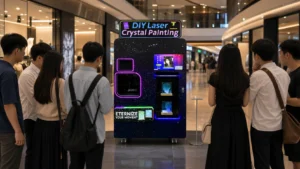
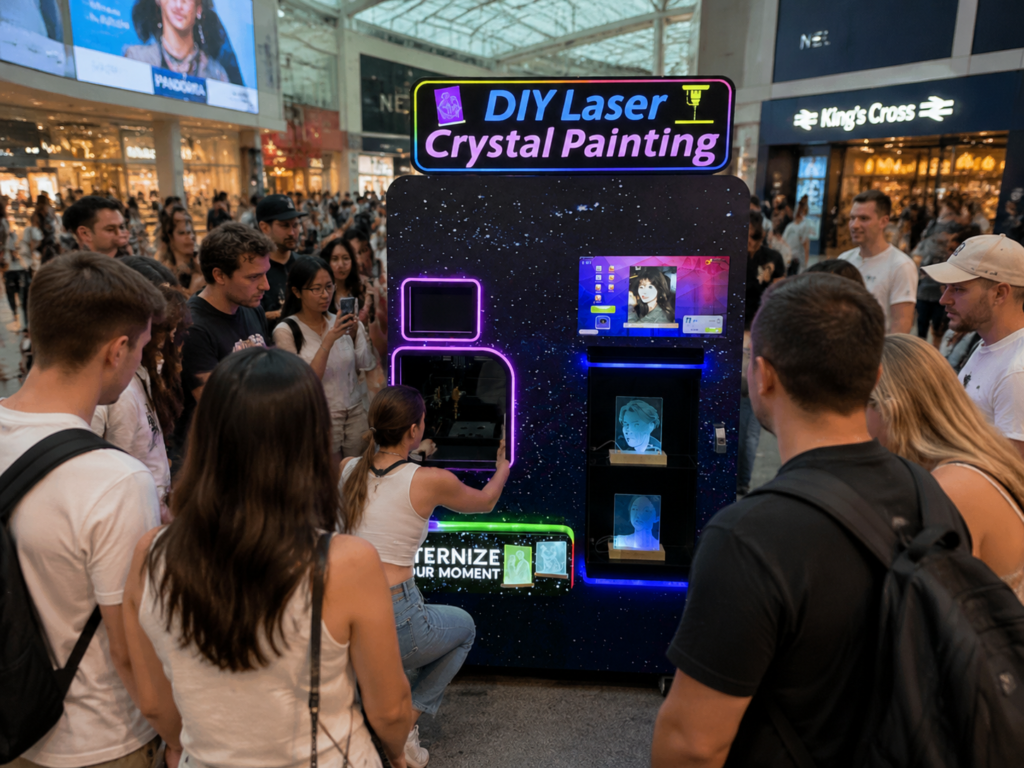
It was a glass engraving vending machine in a Shanghai shopping mall. A couple was watching their names get etched onto a crystal plaque in real time, through a transparent window on the front of the machine. The whole thing took maybe three minutes. When it finished, the woman pulled out the plaque and actually gasped.
That’s when it clicked for me: we’ve officially left the era of “vending machines sell chips and soda” and entered something genuinely different.
Smart vending machines in 2026 don’t just dispense products. They manufacture them on the spot. They take custom orders from touchscreens. They accept twelve different payment methods. They track their own inventory and send you a WhatsApp when they’re running low.
And the business case behind them is getting harder to ignore.
What “Smart Vending Machine” Actually Means Now
Five years ago, “smart vending” meant the machine accepted credit cards. That bar has moved.
Today’s smart vending machines have four things in common:
1. They’re Connected
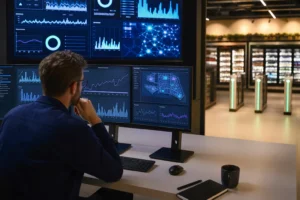
Every modern vending machine worth buying has a cloud backend. Operators can check sales data, inventory levels, machine status, and even adjust pricing — all from a phone app. If a machine in a mall in Dubai is running low on iPhone 15 cases, the operator gets an alert before it becomes a problem.
Red Rabbit’s machines give operators real-time dashboards showing per-machine revenue, popular products, and maintenance needs. One operator I talked to manages 12 machines across three cities from a single laptop.
2. They Make Things, Not Just Sell Them
This is the shift that matters most. Traditional vending is about storage and dispensing. Smart vending is about on-demand manufacturing.
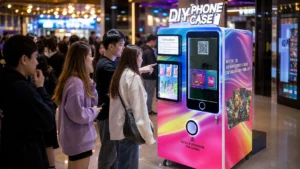
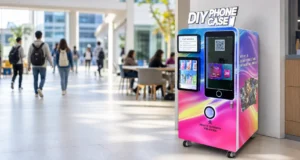
A cotton candy vending machine doesn’t store pre-made cotton candy. It spins sugar into fluffy clouds right in front of the customer. A phone case machine prints custom designs in 90 seconds. A glass engraving machine etches names onto crystal while you watch.
The psychology here is powerful. People pay more for something they watched get made. It feels special. It feels worth $30 instead of $3.
3. They Handle Payments Intelligently
QR codes, NFC, credit cards, mobile wallets, even coin acceptors for markets where cash is still king. The best machines support all of them simultaneously and adjust based on where they’re deployed.
4. They’re Designed to Draw Attention
Walk past a traditional snack vending machine and you probably won’t notice it. Walk past a machine that’s spinning cotton candy into flower shapes with LED lights and music — you’re going to stop. Smart vending machines are built to be seen. The visual spectacle is part of the sales strategy.
Where the Money Is: The Most Profitable Smart Vending Categories
Not all smart vending machines are created equal. Here’s what the numbers show:
Cotton Candy Vending Machines
These are the workhorses of the smart vending world. Raw material costs almost nothing — sugar, food coloring, and a paper stick, maybe $0.15 total. But a machine-spun cotton candy shaped like a flower sells for $5 to $15. The margins are absurd. In theme parks and malls, these machines consistently generate $1,500 to $4,000 in monthly profit per unit.
Ice Cream Vending Machines
Higher material costs than cotton candy, but higher perceived value too. The dual-tank models that offer two flavors plus a mix option tend to perform best. Operators typically see 85%+ gross margins and $2,000–$5,000 monthly profit per machine.
Phone Case Printing Vending Machines
The highest per-unit price point. A custom phone case sells for $20–$40 with under $2 in material cost. Machines are pricier ($5,000–$8,000) but ROI hits within 30–60 days. Key requirement: foot traffic — ideally 1,000+ visitors per day.
Glass Engraving Vending Machines
A newer category growing fast. Personalized crystal gifts, photo engravings, award plaques — all made on demand. The wow factor is high because customers watch the laser work through a viewing window. Average selling price: $25–$50 with under $3 material cost.
The Numbers Behind the Hype
| Machine Type | Monthly Revenue | Monthly Costs | Net Profit | ROI Timeline |
|---|---|---|---|---|
| Cotton Candy | $3,000–$8,000 | $300–$600 | $2,400–$7,400 | 1–2 months |
| Ice Cream | $3,000–$6,000 | $500–$1,000 | $2,000–$5,000 | 2–3 months |
| Phone Case | $6,000–$10,500 | $400–$700 | $5,300–$9,800 | 1–2 months |
| Glass Engraving | $4,000–$8,000 | $300–$500 | $3,500–$7,500 | 1–2 months |
These aren’t cherry-picked success stories. They’re the middle of the bell curve for operators in decent locations.
Why 2026 Is a Turning Point
A few things are converging right now:
Labor costs keep rising. Hiring staff for a retail kiosk costs $3,000–$5,000/month in wages alone. A smart vending machine runs 24/7 with zero employees. For mall operators, the math tips hard toward machines.
Consumers expect self-service. COVID trained an entire generation to prefer touchless, self-service experiences. That habit stuck. People in 2026 are more comfortable with automated retail than ever.
The technology has matured. These are third or fourth generation machines. The bugs have been worked out. The software is stable. Five years ago, smart vending was an experiment. Now it’s a product category.
Distribution is global. Red Rabbit ships to over 130 countries. They handle CE, FCC, UKCA, ROHS, and a dozen other certifications so operators don’t have to figure out compliance. Machines arrive pre-configured for local power, language, and payment methods.
What to Look for When Buying
The manufacturer matters more than the specs. A machine with great specs and terrible support is worse than a mediocre machine with excellent support. Check reviews. Talk to existing operators. Visit the factory if you can — Red Rabbit encourages it.
Remote management is not optional. If a machine doesn’t have cloud monitoring, don’t buy it. You need sales data, inventory levels, and machine status from anywhere.
Customization changes the economics. A machine branded with your logo and colors is worth more than an off-the-shelf unit. Branding builds recognition, recognition builds trust, trust builds repeat purchases.
The Risks Nobody Talks About
Location dependence. A great machine in a dead location is dead weight. Count foot traffic at different times of day before committing.
Maintenance reality. “Low maintenance” doesn’t mean “no maintenance.” Someone has to restock and clean — factor it into your model.
Regulatory surprises. Different places have different rules. Check local regulations before committing.
Competition heating up. The smart vending space is getting more crowded. Prime locations at reasonable rates won’t stay available forever.
The Longer View
Smart vending machines aren’t a get-rich-quick scheme. They’re a genuine business model — one with strong unit economics, low operating overhead, and a clear path to scaling once you’ve proven the concept.
The operators I’ve talked to who succeed share a pattern: start with one machine, learn what works, then replicate. Five machines in five malls. Ten machines across three cities. Cloud management platforms make this scaling almost trivial.
If you’re considering getting in — now’s the time. Not because there’s a deadline, but because prime locations are still available and the technology has finally matured to the point where it’s reliable enough for serious operators.
Want to explore smart vending for your business?
Get a free consultation and personalized machine recommendation →